
What Is a Credit Inquiry? Key Insights You Need to Know

Ever wondered what happens behind the scenes when you apply for a credit card or a loan? Lenders take a peek at your credit report, and that "peek" is officially recorded as a credit inquiry.
Think of it as a financial background check. When you ask for credit, the lender wants to see your track record with money to decide if you're a reliable borrower. This request for your report gets logged on your file.
Why Credit Inquiries Matter
Each time you fill out an application for a new mortgage, car loan, or even a department store card, the lender pulls your credit report from one of the major bureaus. This action leaves a footprint, known as a credit inquiry, that other lenders can see.
It's a core part of how lenders manage risk. By looking at your history, they get a sense of how you've handled debt before. If you want to get more familiar with the lingo, this glossary of key financial terms is a great resource.
It's crucial to know that not all inquiries are the same. They're split into two very different types:
This infographic breaks down how a credit inquiry fits into the lender's review of your financial profile.
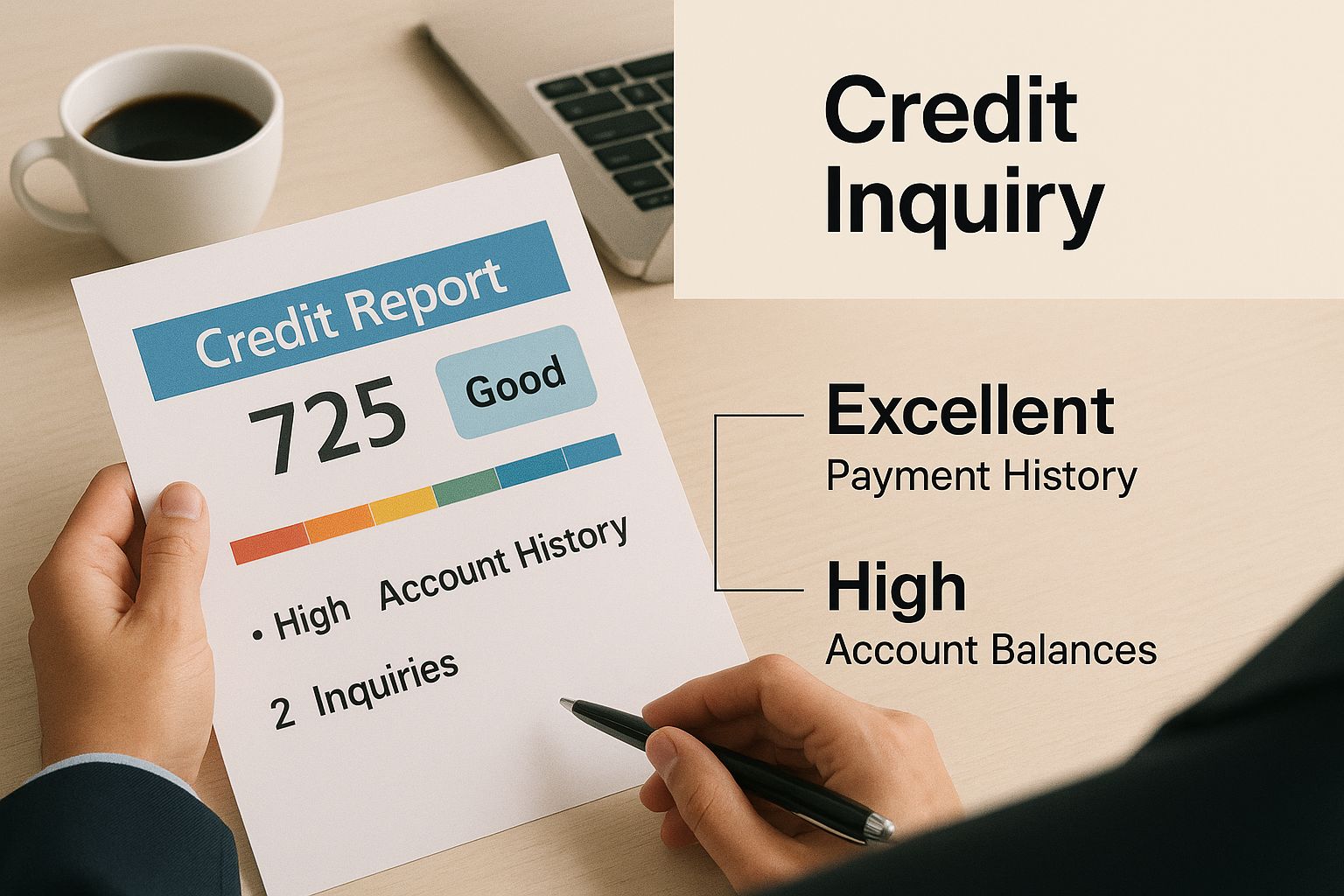
As the visual shows, an inquiry is the lender's ticket to viewing your credit history, which is a make-or-break step in their decision to approve your application.
The Critical Difference Between Hard and Soft Inquiries

It’s easy to think all credit checks are the same, but they’re not. They actually fall into two very different buckets: hard inquiries and soft inquiries. Getting a handle on this difference is one of the most important things you can do to protect and build your credit profile.
Think of it this way: a hard inquiry is like formally applying for a new job. You fill out an application, give your permission, and the company does a deep dive into your background. A soft inquiry is more like a recruiter glancing at your public LinkedIn profile—it’s just a quick look that doesn’t leave a mark.
So, What's a Hard Inquiry?
A hard inquiry, sometimes called a "hard pull," only happens when you officially apply for credit. This is you, giving a lender the green light to scrutinize your credit report because you want to borrow money for a mortgage, a car loan, or a new credit card.
These inquiries show up on your credit report for everyone to see and stick around for up to two years. They can cause a slight, temporary dip in your credit score because they signal to other lenders that you might be taking on new debt.
And What About Soft Inquiries?
A soft inquiry (or "soft pull") is the complete opposite—it has zero effect on your credit score. These happen all the time behind the scenes and are more for informational purposes than for lending decisions.
You’ll see a soft inquiry when:
Because these aren’t tied to a new application for credit, other lenders can’t even see them on the report they pull. They are essentially invisible to anyone but you. For a deeper dive, you can learn more about how lenders use a soft pull for credit checks in these situations.
Hard Inquiry vs Soft Inquiry At a Glance
To make it even clearer, let's break down the key differences between a hard pull and a soft pull side-by-side.
As you can see, the real distinction comes down to purpose. A hard inquiry is a formal part of the lending process, while a soft inquiry is for just about everything else.
Do Multiple Hard Inquiries Hurt My Score?
This is a common worry, and it makes sense. If one hard pull can ding your score, won't a bunch of them look really bad? The answer is: it depends.
Credit scoring models are smart. They know that when you’re shopping for a big-ticket item like a car or a house, you’re going to apply with multiple lenders to find the best rate. To account for this, multiple inquiries for the same type of loan (like a mortgage or auto loan) made within a short window—usually 14 to 45 days—are bundled together and treated as a single event.
So, go ahead and shop around for that car loan. Just be sure to do all your applications within a couple of weeks to minimize the impact on your credit score.
How Hard Inquiries Really Affect Your Credit Score
Let's clear up a common myth: many people think a single hard inquiry will tank their credit score. The truth is, it’s usually much less dramatic. A single, authorized hard inquiry will typically only cause a small, temporary dip in your score—often less than five points. Think of it as a tiny speed bump, not a roadblock.
What really matters to lenders, though, is the pattern. If you suddenly apply for a bunch of different credit cards and loans all at once, that can look like a red flag. It might signal to them that you're in financial trouble, which could lead to a more noticeable drop in your score.
The Smart Way to Shop for a Loan
Thankfully, the credit scoring systems are smarter than you might think. They get that people need to shop around to find the best deal on a big loan, like for a house or a car. This is where the "rate-shopping" window comes in handy.
This means you have a grace period to let several mortgage lenders or car dealerships check your credit without each one dinging your score. It's a crucial rule to know when making big financial moves, like financing investment property, as it lets you find the best terms without hurting your credit.
So, how do you put this into practice?
By keeping these simple rules in mind, you can shop for the best rates with confidence and protect the credit score you've worked so hard to build.
Actionable Steps to Manage Your Credit Inquiries

Now that you know what credit inquiries are, you have the power to protect your financial profile. The good news is that taking control isn't complicated. It really just comes down to being thoughtful about when—and why—you apply for new credit.
The best strategy is also the simplest: only apply for credit when you genuinely need it. It can be tempting to apply for a store card to get a one-time discount or chase a sign-up bonus, but each application triggers a hard inquiry. Make them count.
Routinely Check Your Credit Reports
One of the most important habits you can build is actively monitoring your credit files. You are entitled to free copies of your credit reports from the big three bureaus—Equifax, Experian, and TransUnion. And don't worry, checking your own report is a soft inquiry, so it has zero impact on your score.
Reviewing your reports regularly helps you catch any unauthorized hard inquiries right away. Seeing an inquiry from a lender you don't recognize might just be an error, but it could also be the first red flag for identity theft.
Disputing Unauthorized Inquiries
What if you find a hard inquiry on your report that you didn't authorize? You have the right to challenge it. The process starts with filing a formal dispute directly with the credit bureau that's reporting the inaccurate information.
To get an unauthorized inquiry removed, here's what you need to do:
For a more detailed walkthrough, our guide on how to remove inquiries from your credit report breaks down every step. Taking these proactive measures ensures your credit history is an accurate reflection of your financial life.
The Bigger Picture: How Inquiries Fit into the Economy
Think of your credit report as your financial resume. Every time you apply for credit, that hard inquiry is like a note jotted down in the margins. But these notes aren't just about you; they’re also a small part of a much larger story about the health of the entire economy.
When the economy is booming, lenders tend to be more optimistic. They loosen their purse strings, making it easier to get approved for loans and credit cards. In a strong economy, one or two recent hard inquiries on your report might not even raise an eyebrow.
Economic Mood Swings and Your Credit
But what happens when the economy takes a downturn? During a recession or periods of uncertainty, lenders get nervous. They tighten their standards significantly to protect themselves from risk.
Suddenly, those same hard inquiries carry a lot more weight. A flurry of recent applications that might have been ignored before could now look like a red flag, signaling that you're in financial trouble.
This isn't just a local phenomenon; it happens globally. The COVID-19 pandemic, for example, triggered huge shifts in lending and borrowing worldwide. While U.S. credit card delinquency rates temporarily dipped, Canada saw a spike, especially among younger people. Diving into global credit trends really highlights how economic pressures shape lending decisions.
Keeping an eye on the economic climate can help you time your credit applications for a better shot at approval. It’s about playing the long game, not just reacting to your immediate needs.
Common Questions About Credit Inquiries Answered
Once you get the hang of hard and soft inquiries, you'll find other, more specific questions start to pop up. The world of credit can feel a little confusing at times, but a few direct answers can clear things up and help you manage your credit with confidence. Let's tackle some of the most common ones.
How Long Does a Hard Inquiry Stay on My Credit Report?
A hard inquiry will stick around on your credit report for two full years (24 months). Any lender who pulls your report during that time will see that you applied for credit.
But here’s the good news: its actual effect on your credit score is much shorter. Most scoring models, like FICO and VantageScore, only factor in a hard inquiry for the first 12 months. After that first year, it’s still visible on your report, but it stops weighing down your score.
Can I Remove a Legitimate Hard Inquiry?
The short answer is no. If you're the one who applied for the loan or credit card, that inquiry is a legitimate part of your credit history. Think of it as a factual record—it’s there to stay for its two-year term.
What you can and absolutely should do, however, is challenge any inquiry you don't recognize.
This isn't just about your score; it's a crucial step in protecting yourself from fraud.
Will Checking My Own Credit Score Hurt It?
Not a chance. This is probably one of the biggest credit myths out there, and it keeps too many people in the dark about their own financial health. When you check your own credit score or pull your own report, it’s always a soft inquiry.
How Many Hard Inquiries Is Too Many?
There isn't a single magic number that works for everyone. The impact really depends on your unique credit profile. Someone with a long, solid credit history can absorb a few inquiries much better than someone with a brand new or thin credit file.
As a general rule of thumb, it pays to be cautious. Many lenders start getting nervous when they see more than six hard inquiries within a 12-month period. It can look like you're desperate for credit or taking on too much debt at once. The key is to be strategic about when and where you apply.
Ready to take control of your financial future? With itin score, ITIN holders can build and monitor their U.S. credit for free. Get unlimited access to your credit report, personalized insights, and an AI-driven credit coach to guide you every step of the way. Sign up in minutes and start building your credit today at https://www.itinscore.com.